
This month’s ✨ free marketing idea ✨ is sponsored by TLDR.
Reaching developers and tech people through ads is tough. They ignore LinkedIn, skip past Google ads, and tune out most marketing.
TLDR works because 6 million tech professionals actually WANT to read it (including me) - they subscribed on purpose. You can sponsor their 12 specialized newsletters (AI, DevOps, Product, Marketing, etc.) to get in front of exactly who you need.
They handle the copywriting, only allow 3 sponsors per newsletter, and companies like Delve have made $1M in pipeline from it.
Want to sponsor the Marketing Ideas newsletter? Click here to apply.
Billboards are a waste of money 🖼️
I live 5 minutes from Times Square. I walk through it almost every day.
So I see every new billboard that goes up…
I always get mad.
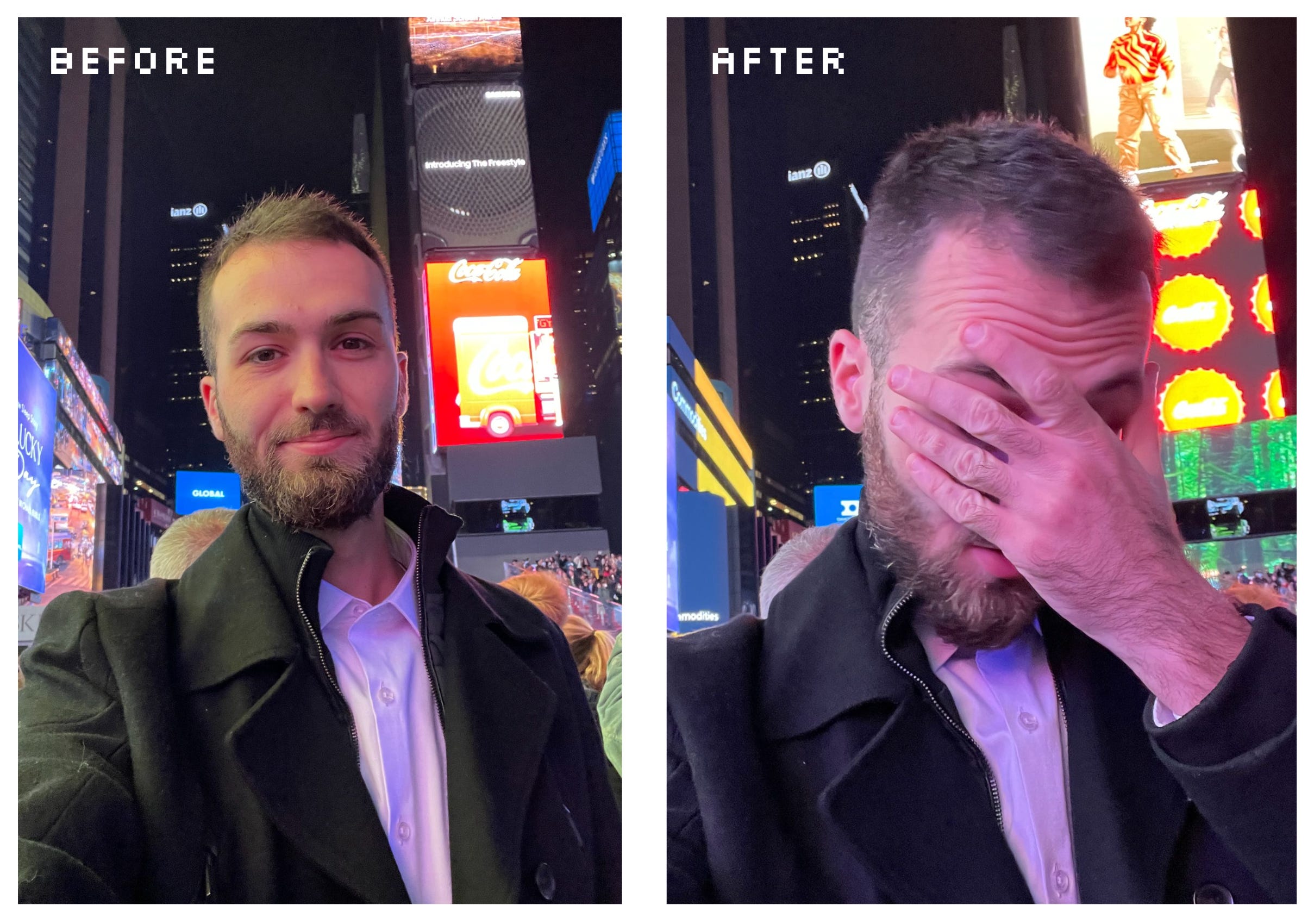
Because it’s always the same pattern:
Some startup raises $20M, decides it’s time for the big leagues, and drops $50K on a Times Square billboard with a tagline and URL or QR code.
I usually DM the CMO on LinkedIn a few weeks later: “How’d it perform?”
“Didn’t move the needle”, they always say.
But then there’s companies like Loops - a tiny email startup - who spend $2K on a Times Square billboard and successfully generate hundreds of leads.
Or Muzz, who put one random user’s face up and went massively viral. Or Fiverr, Bumble, Gong, Stripe, Venmo - all doing the same thing.
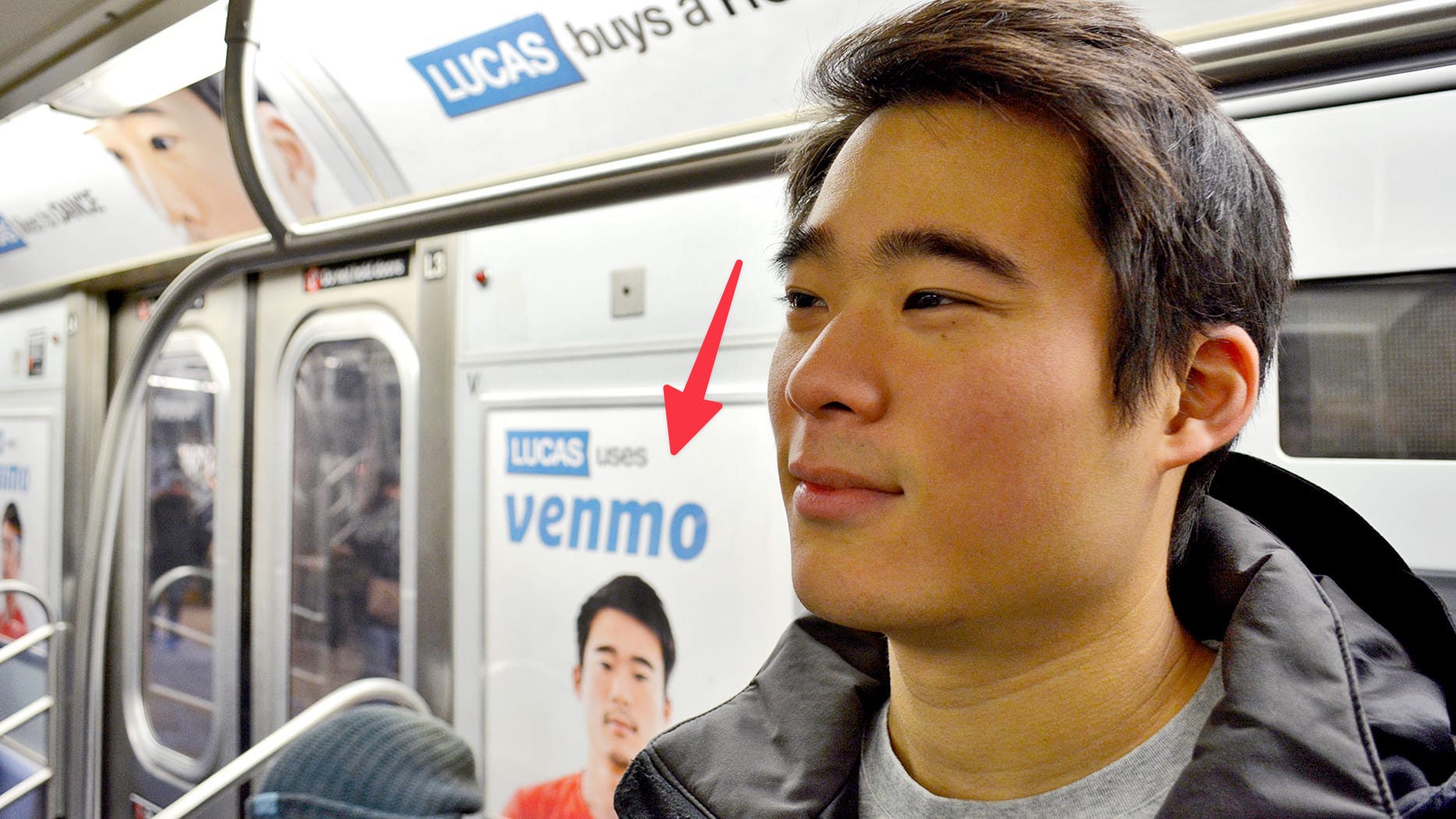
The pattern is obvious once you see it:
Instead of advertising themselves → they advertise other people.
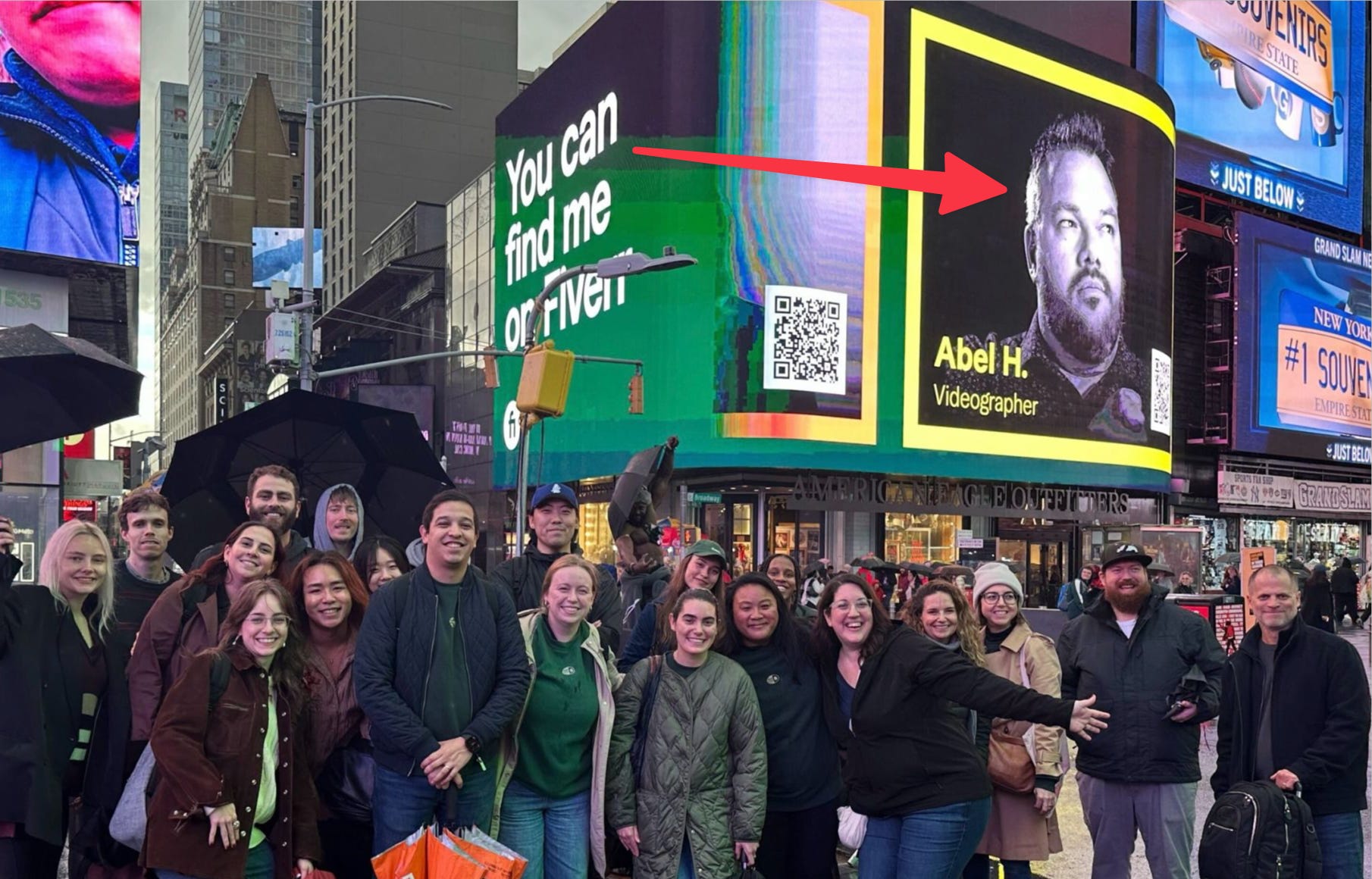
I’m going to break down exactly why this works and how you can copy it.
People on the street don’t matter anymore 🏙️
Let me be direct about this:
The people walking past your billboard DON’T MATTER.
I know that sounds crazy. But think about it. Maybe 10 people will glance at your ad while rushing to the subway. None of them will remember it, and more importantly, none of them cares.
The value of billboards comes from one thing: shares.
When someone takes a photo of your billboard and posts it to LinkedIn or Twitter - that’s when you win. Because that photo can reach thousands of people in your exact target audience.
How to make people share? Just put them on the billboard ⭐️
Circle understood this perfectly:
They’re a community platform for creators. Instead of advertising themselves, they featured their customers - creators who use Circle:
Every creator they featured shared it on social (and became an ad for Circle):
Boom. 💥
Muzz (a dating app) featured one real user - Mohamed Ibrahim - with “Help me find a wife!” on billboards. The campaign went viral because people snapped photos of a real person (not an actor) in such a creative way. News outlets covered it too.
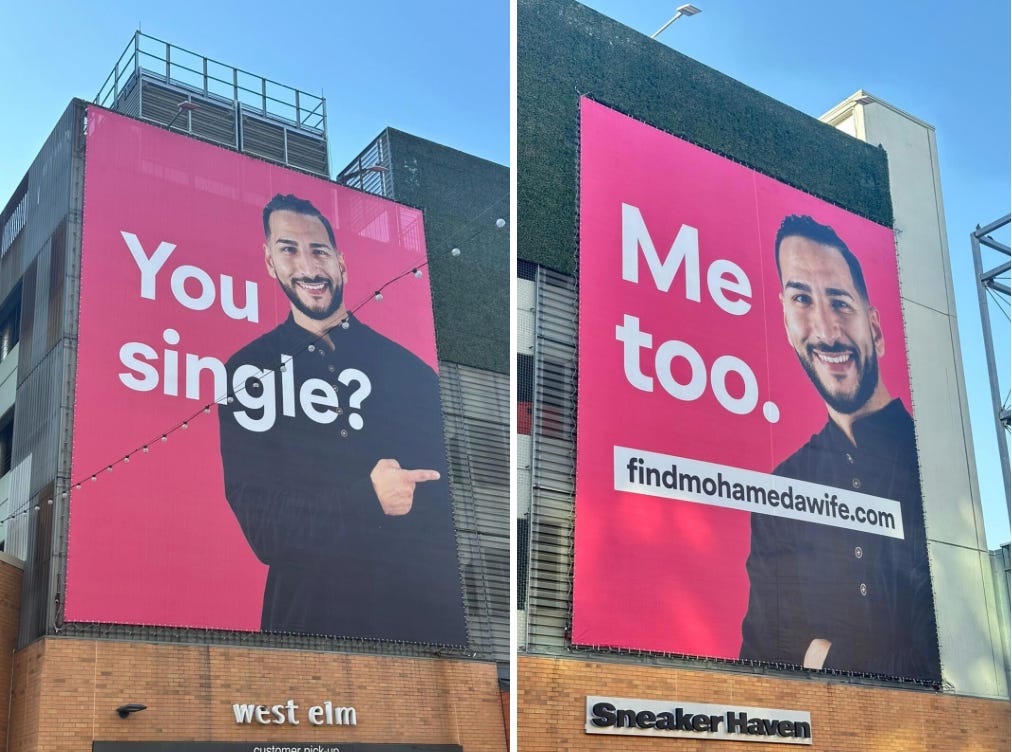
Same pattern everywhere:
🎯 Fiverr features real freelancers
👥 Bumble put 112 real users on Times Square
🛠️ Venmo featured their engineer Lucas
🎉 Gong flies employees out to NYC to see themselves on billboards
🥕 Stripe celebrated their customer Instacart (I took this photo yesterday) ↓
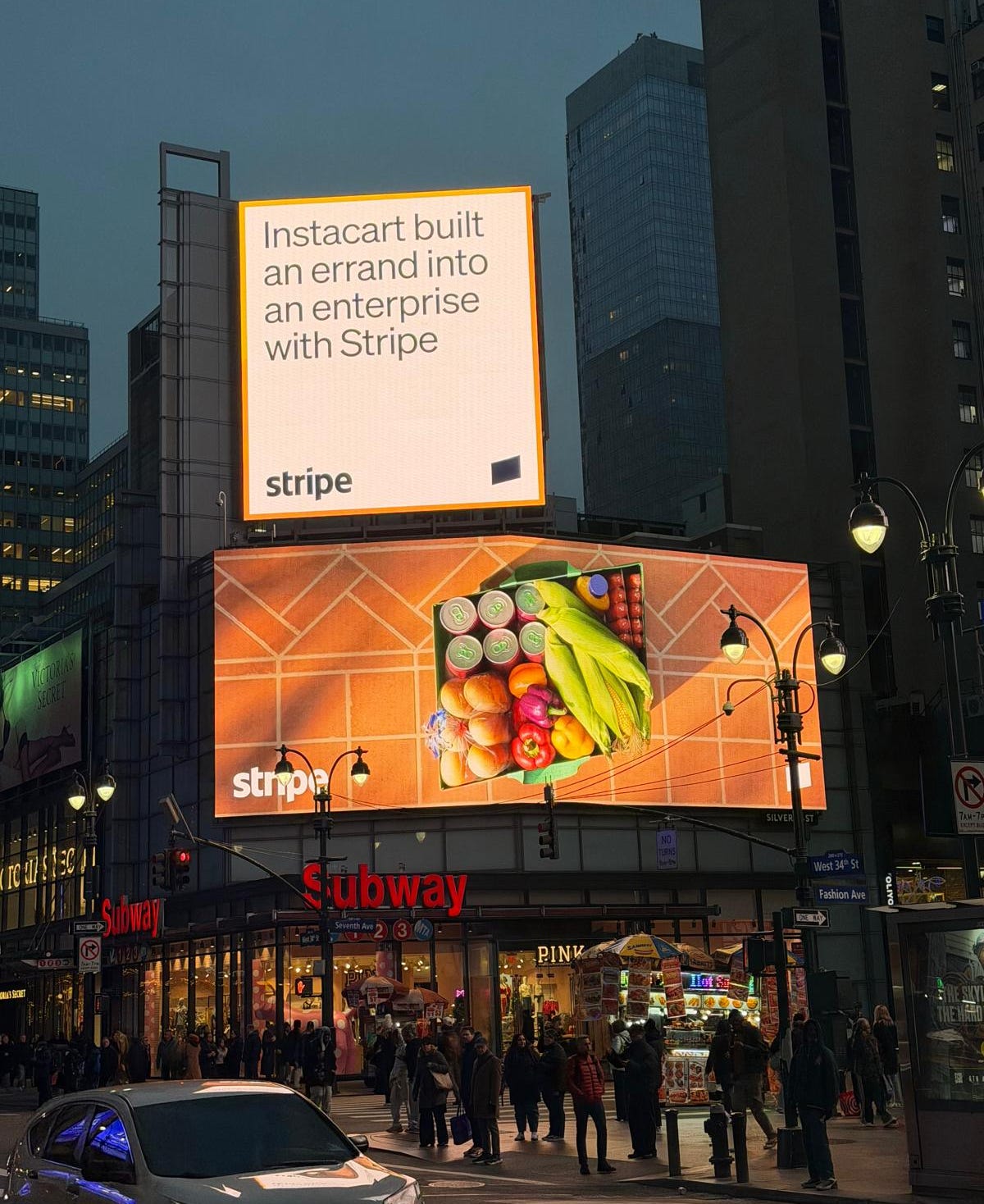
Most billboards say “look at us”. But these say “look at you”. That’s what makes people pull out their phones.
The smartest lead-gen move I’ve seen 💰
Now, here’s why it’s one of my favorite marketing ideas: you don’t have to wait for shares. You can use this strategy to increase the number of booked demos.
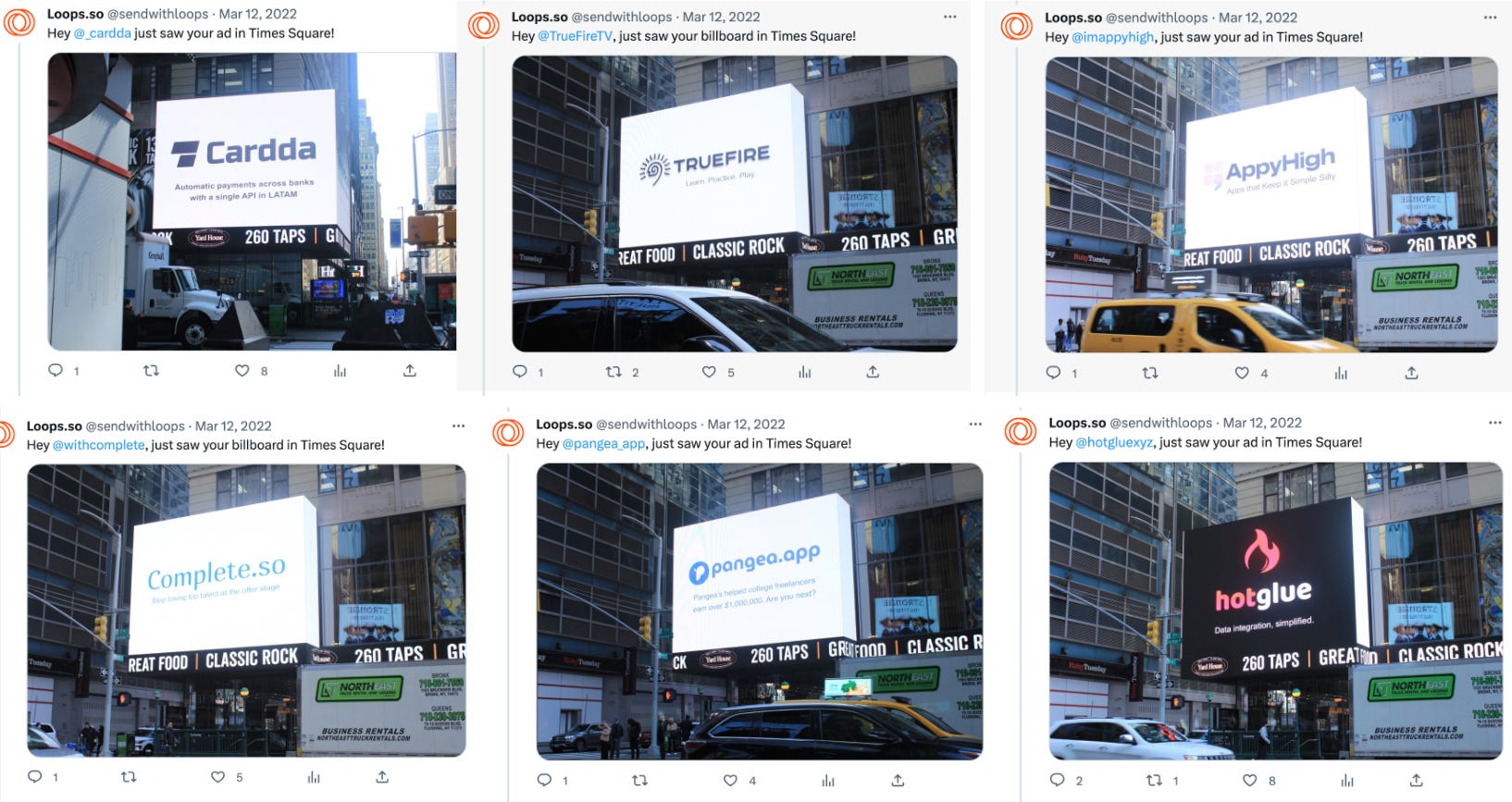
Loops (a tiny email startup) created a webpage asking startups to submit their logo to get featured on Times Square. Then they rented a billboard for a few hours, rotated dozens of logos through it, hired a photographer, and posted every photo.
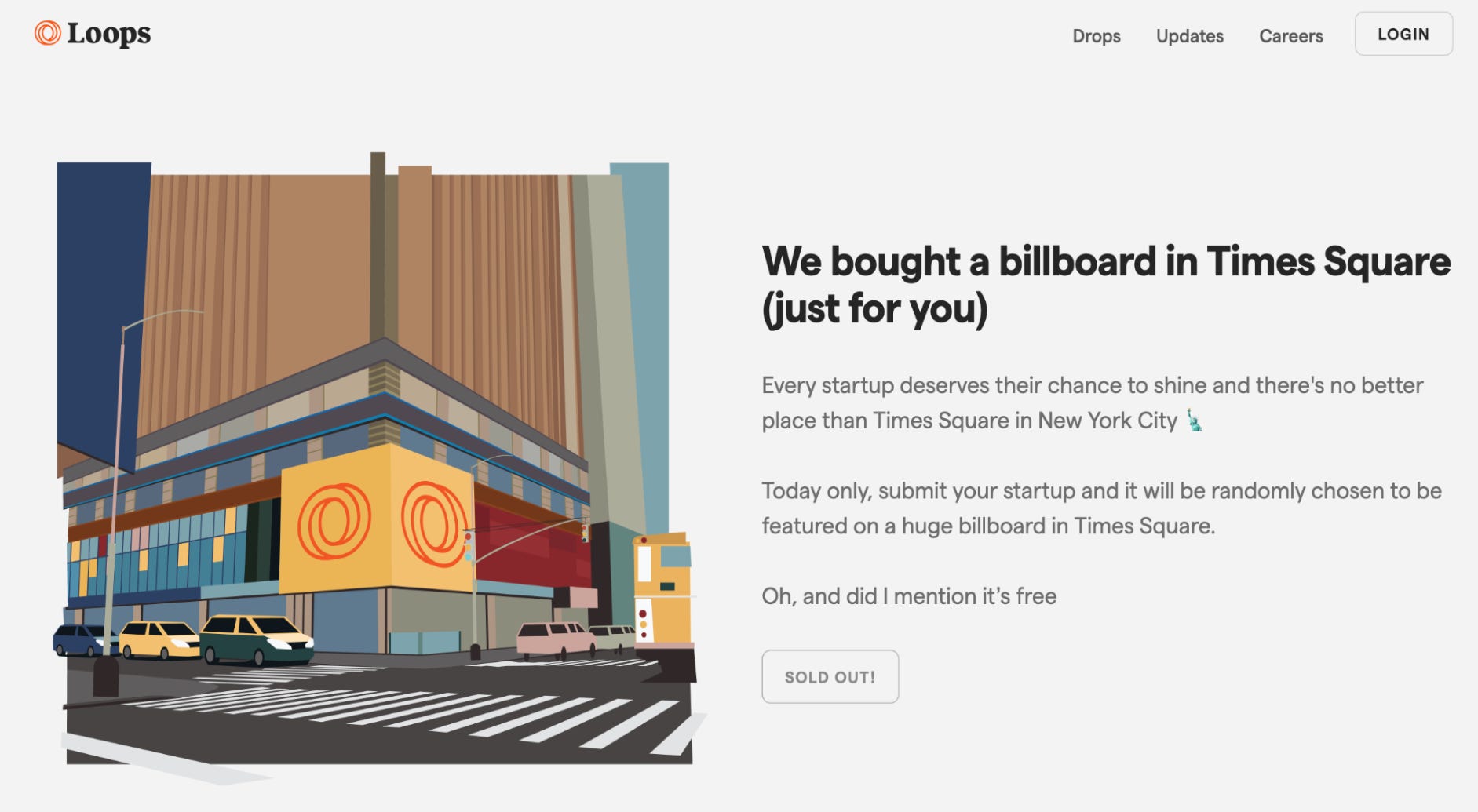
Every person who submitted is their exact target customer: Marketing managers at small startups. Now Loops has warm email threads with hundreds of qualified leads who feel grateful.
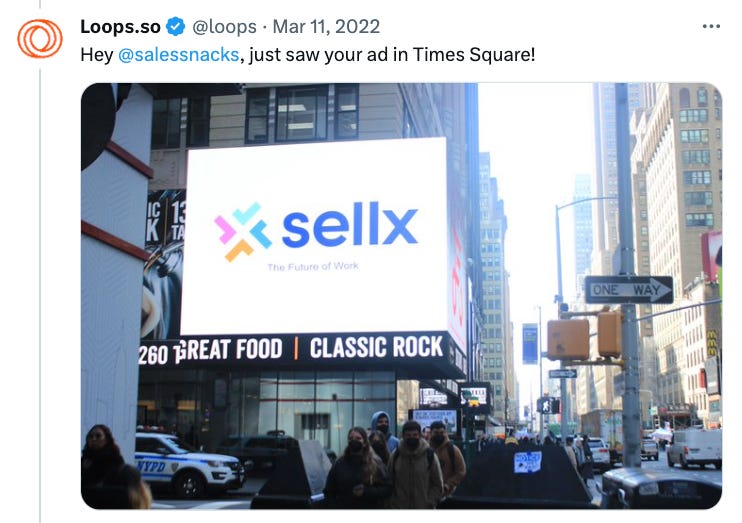
It cost them about $2,000 (I’ll show you exactly how to get this price in a minute). The ROI here is insane.
Your playbook for billboard arbitrage 📙
I call this “billboard arbitrage” because you’re exploiting a massive price gap.
Here’s the math:
A Times Square billboard costs $2,000-5,000 for a few hours. But getting 1,000,000+ real social impressions would cost you $20,000+ in paid social ads. Maybe more.
You’re buying in one market (outdoor advertising that is “meh”) and immediately flipping it in another market (explosive social media engagement).
The arbitrage works simply because featured people don’t see it as you promoting them - they see it as their own personal victory. So they share it everywhere. Heck, their moms share it.
Here’s exactly how to pull off this arbitrage:
Pick a “target” that will probably share a photo of the billboard if they’re featured on it - employees, customers, partners, leads, etc. Get their consent and tease that it’s coming. The more the merrier.
Design a billboard that praises them. The payoff (Times Square fame) is massive.
Buy short bursts (no need for long campaigns). You can get Times Square for *really* cheap: a few hours starting at $2,000 through Blip Billboards. Rotate graphics every few seconds if needed.
Hire a photographer (non-negotiable!). People need proof their logo/face was actually up there. One photographer for 3 hours costs $500.
Let them do the marketing. Consider sending the photos privately before promoting them yourself.
Create personalized social posts. This is my fav step (if they don’t share it). Share it, but don’t just say “we featured [someone]”! Create individual posts for each company/person and make it look spontaneous: “Just saw @[someone] on Times Square!” like Loops did. Let featured people “discover” it and share organically.
And that’s how you turn a boring billboard into 50 unpaid brand ambassadors. 💎
Remember:
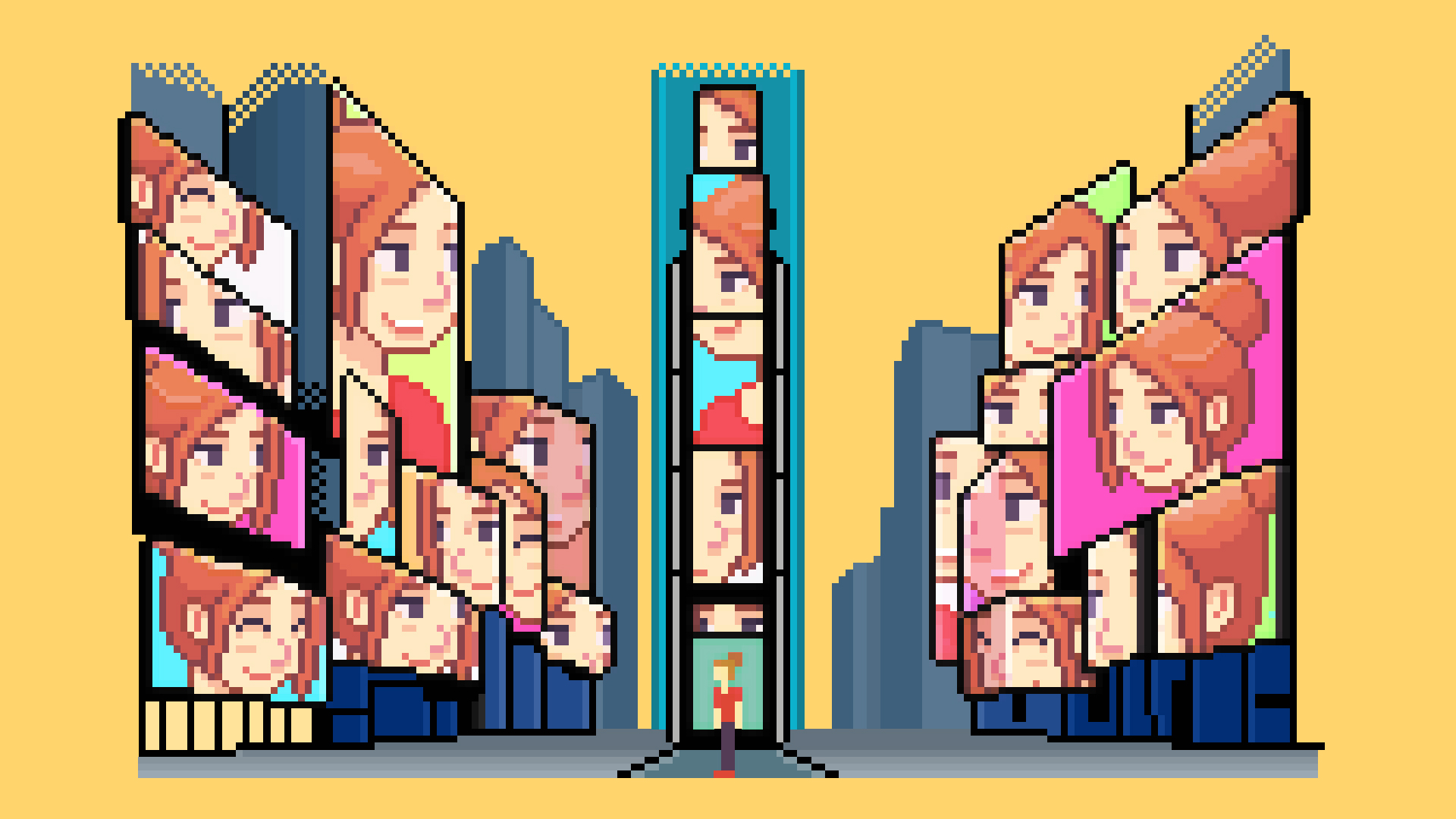
The best marketing puts *your customers* in the spotlight. Not yourself.
Then, and only then, they do the marketing for you.
See you next week ✌️

P.S. If you enjoyed this marketing idea, please tap the Like button below ♥️ Thank you!