
✨ Today’s free article is sponsored by Warmy ✨
I talk to a lot of marketers who obsess over subject lines and copy, but their emails are landing in spam (and they have no idea). It’s such a waste.
Warmy fixes email deliverability - it warms up your domain, monitors inbox placement, and keeps you out of spam folders. Most companies don’t realize their emails are getting filtered until their open rates tank.
Worth checking if you’re doing email marketing:
(Click here to sponsor the Marketing Ideas newsletter)
What to do if your marketing budget is $0 🪫
If your marketing budget is $0, you already have everything you need.
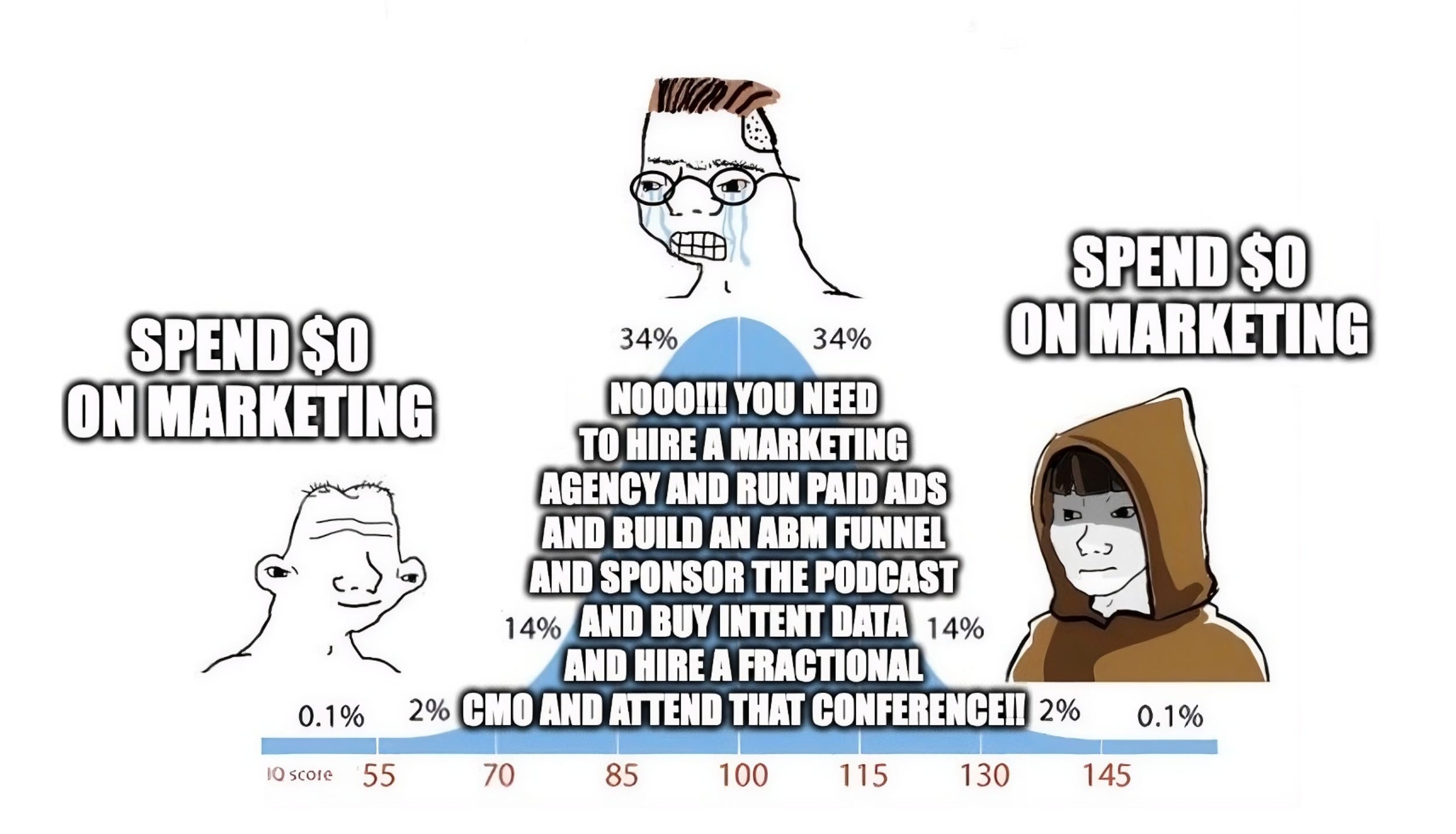
I’ve run marketing for companies with $32 billion exits and side projects with literally zero dollars in spend. I also went through 50 of the fastest-growing companies to map exactly how they reach new customers. The pattern was identical every time: Every great $0 win came from inside the company before any external spend.
In today’s newsletter: the 7 internal resources every company already has, and how to turn each one into a $0 marketing channel. 🔋
Here we go ↓
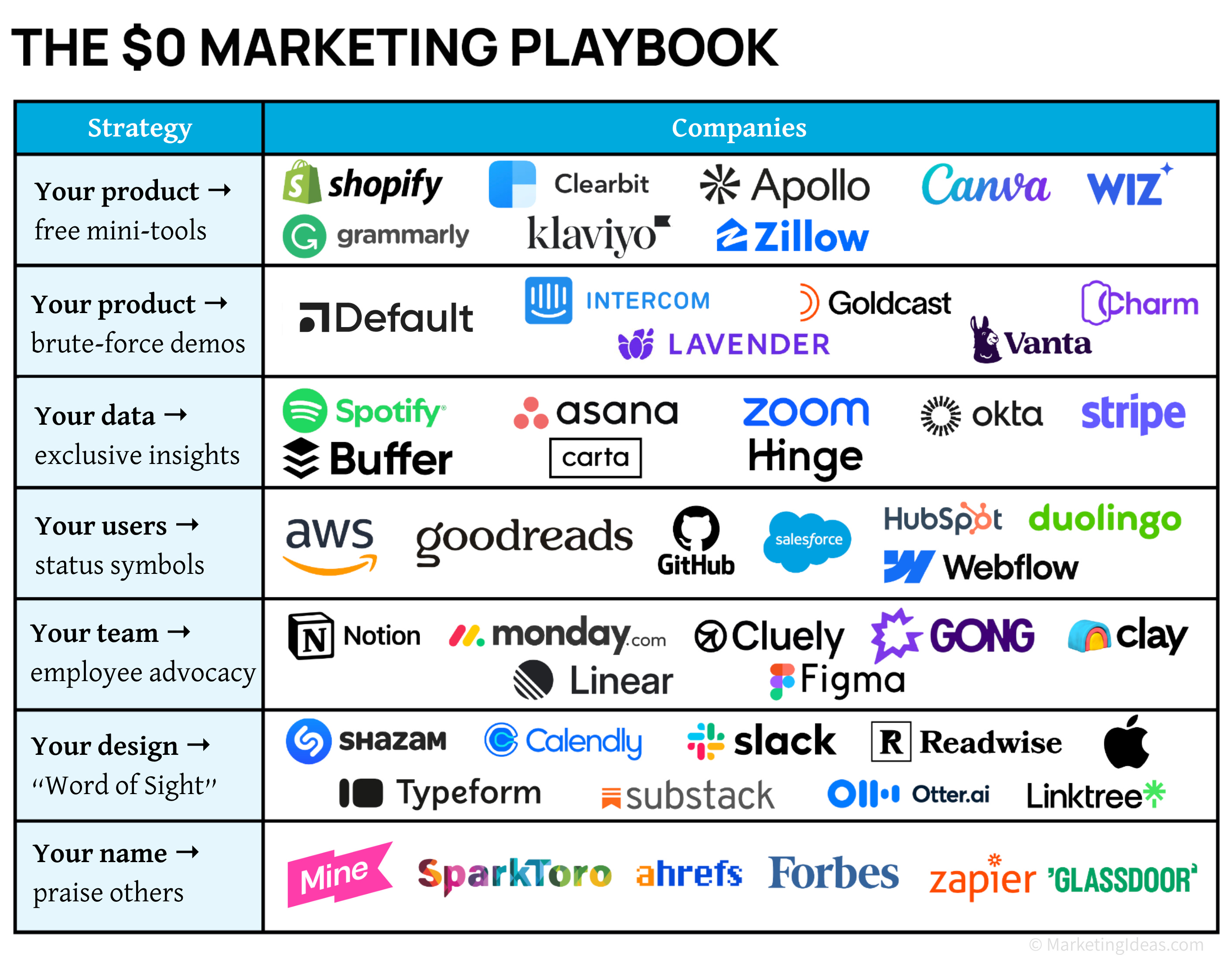
1. Your product → free mini-tools 🧪
Take an existing feature from your product, strip it down, and ship it as a standalone free tool with its own URL (don’t ask for email or any other friction).
Examples:
Grammarly built a $13B company on the back of its free Chrome extension and plagiarism checker.
At Wiz I worked on shipping our free Cloud Threat Landscape. It’s the same internal threat intel database our researchers build daily, just opened up to the world.
Shopify’s Name Generator ranks for a billion long-tail searches.
All examples I found were once part of a larger product. But they’re now their own SEO target and their own backlink magnet (and their own Product Hunt launch). You’re giving people a free solution to a small problem, so your main product becomes the obvious upgrade.
How to do it: walk through your product with your PM, and find a feature that solves a narrow problem on its own. Strip it out and launch it on its own URL.
Read more: Mini-tool playbook
2. Your product → brute-force demos 🥷
Use your product on a dream prospect’s behalf, then send them the result (with no pitch or strings attached).
I learned this works because somebody did it to me. When my Substack account got impersonated, the CEO of Charm Security ran his impersonator-hunting product on the fake account, caught it, and DM’d me the proof. I wrote a whole article about them because of that move (it was not sponsored).
Examples:
Christina Cacioppo, co-founder of Vanta, heard the Segment team was struggling with SOC-2 compliance. She proactively sent them a personalized compliance spreadsheet, for free, and it worked.
Goldcast built a hyper-personalized demo video for every dream account. They closed deals before sales calls even happened. (Full play here)
Tomer Dean, founder of Lychee (AI podcast editor), manually clipped real episodes for real hosts, emailed them the result, and closed deals:
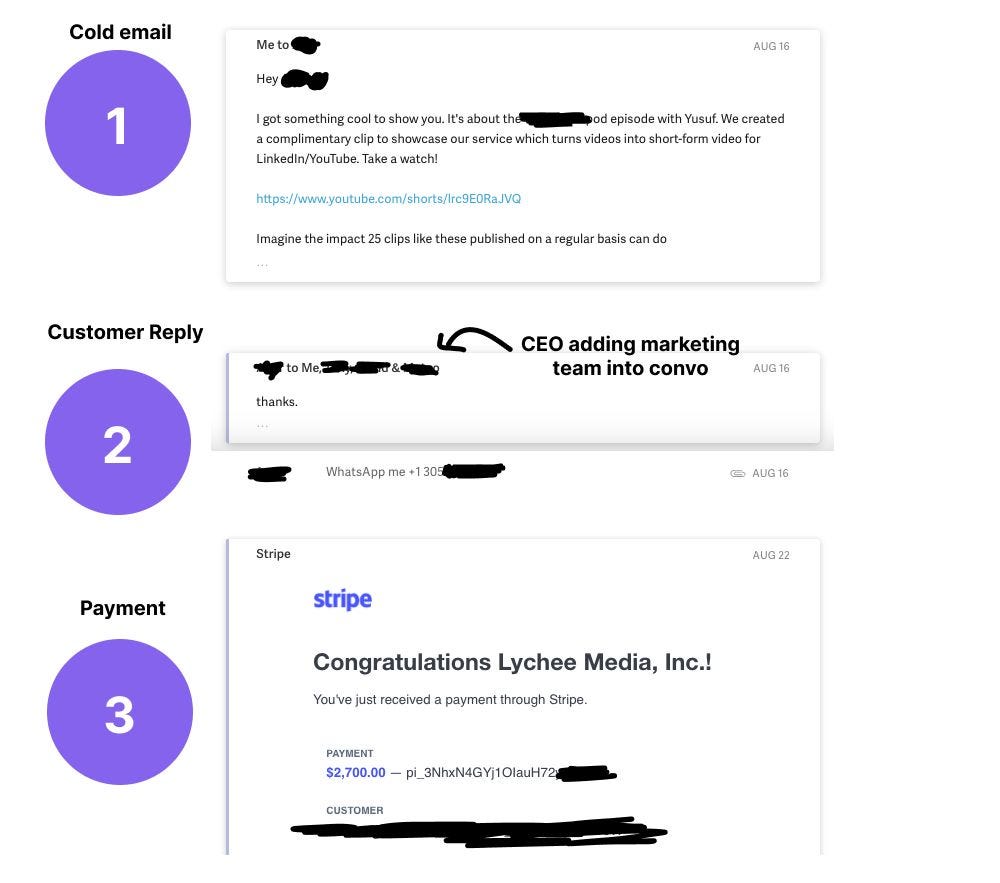
The exact copy you should send:
“I spent [X] hours analyzing [their thing] and created [this] for you. No strings attached… thought you might find it useful: [link/image]”
If they ignore you → make it public. Post on LinkedIn, tag them, praise their work, mention how your product “helped.” Worst case they ignore you again. Best case they share it. (Default.com’s CEO did this with Deel and went viral.)
How to do it: pick 5 dream customers, spend 30 minutes on each doing manually what your product does automatically, then send the result with the line above.
Read more: Brute-force playbook
3. Your data → exclusive insights 📡
Mine your internal data for a surprising pattern → publish it → then journalists, customers, and even competitors share it for you.
Examples:
Carta’s startup equity data reveals founder ownership rates at IPO and equity for early hires. Founders share it like wildfire. Every funding article on TechCrunch quotes it.
Okta’s “Businesses at Work” ranks the fastest-growing SaaS apps using their own usage data. Every company featured shares it because it praises them. Startups are motivated to integrate with Okta just for a chance to be featured.
Spotify Wrapped is the most copied marketing campaign of the last 5 years. It’s an SQL query.
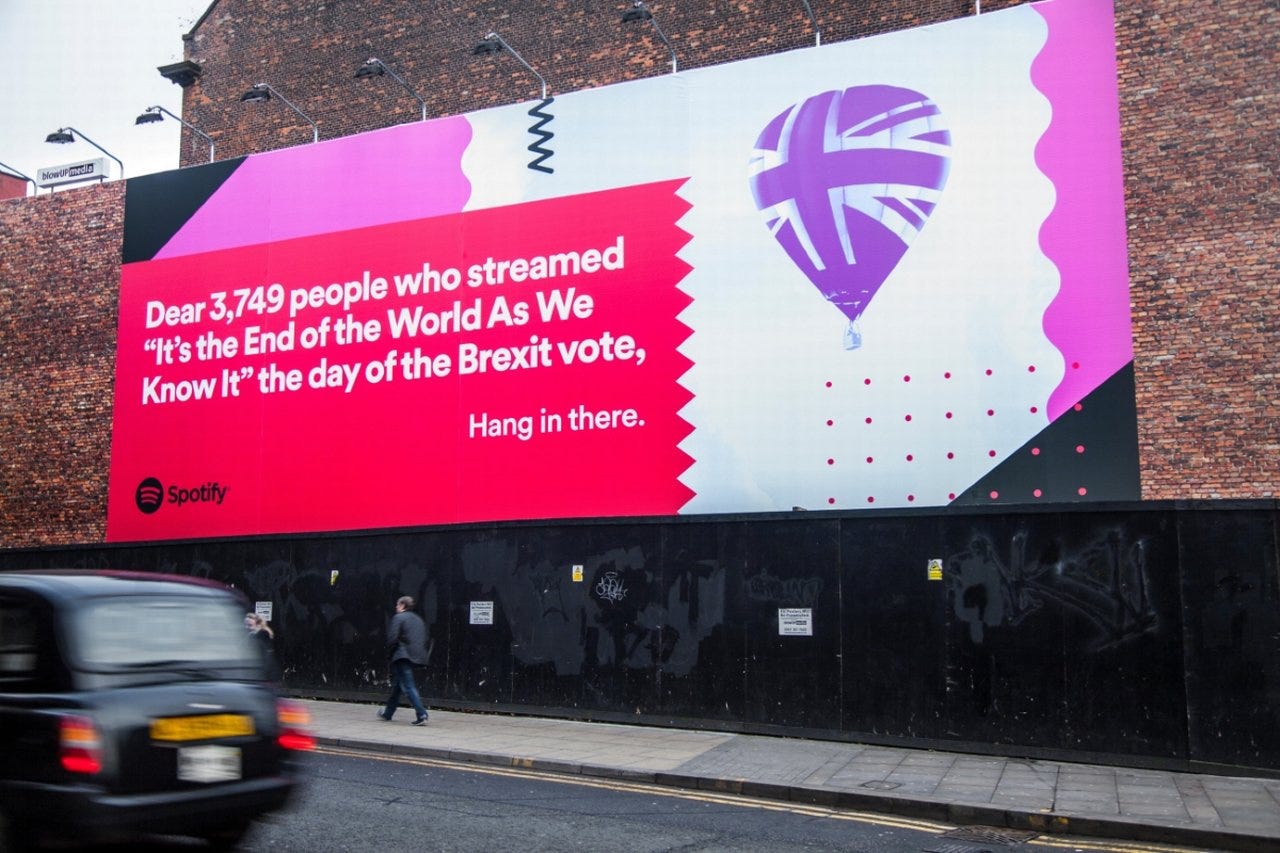
(Bonus: Spotify noticed 3,749 people streamed “It’s the End of the World As We Know It” on the day of the Brexit vote and made an ad about it. Genius real-time data play!)
Asana’s “Anatomy of Work” Index revealed workers spend 58% of their time on “work about work”. Cited everywhere from HBR to Ali Abdaal.
Stripe’s Online Economic Indicators publishes real-time payment data that gets cited as if Stripe were a research firm.
Gong analyzed millions of sales calls and found that the opening line “How have you been?” outperforms “How are you?” because it implies an existing relationship. Super valuable for sales teams.
No interesting data? Run a survey. That’s how Asana built the Anatomy of Work from scratch.
How to do it: ask yourself: “what’s the most surprising number in our database?”
Read more: Data marketing playbook
4. Your users → status symbols 🎟️
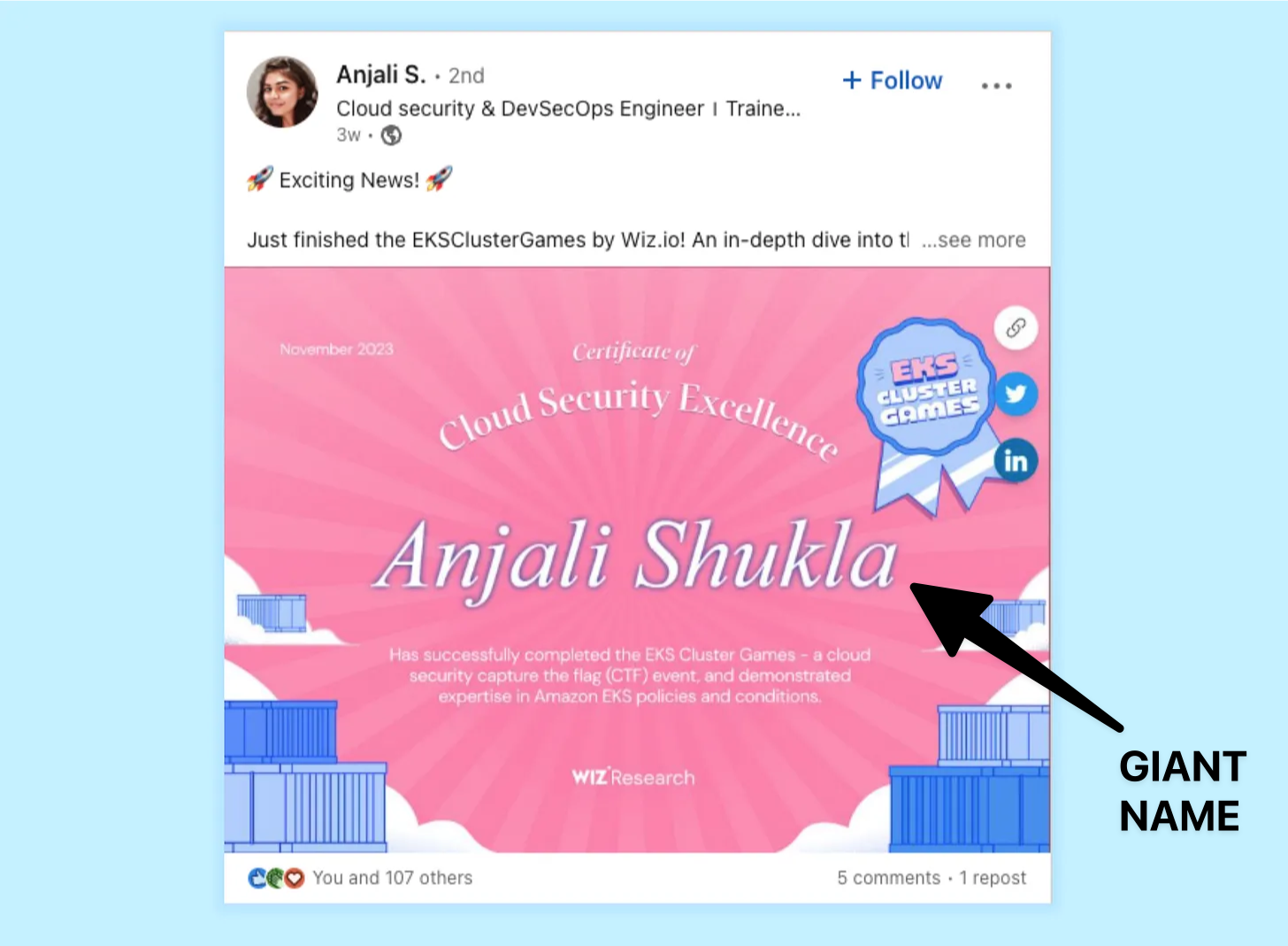
Give your users something worth showing off publicly. Certificates, badges, “Verified” tags, exclusive club memberships, etc. They promote for you because the badge makes THEM look good.
The trick (we learned this at Wiz): make the user’s NAME big, not your logo. When you flip those proportions, social shares jump → at Wiz they went up 300% almost overnight.
Examples:
HubSpot Academy certifications get added to thousands of LinkedIn profiles every single month.
AWS certifications are job requirements at half the cloud-engineering postings on LinkedIn. The badge is the resume.
GitHub’s contribution graph and Stars program are like a professional currency for developers.
Salesforce Trailblazer ranks end up in email signatures across every sales org on earth.
Duolingo’s streak counter has people sharing their 1,000-day milestones on Instagram. The streak is the marketing.
Goodreads’ annual reading challenge counter has millions of people posting their book counts in December.
How to do it: figure out the one status the top 10% of your users would brag about owning. Build the cheapest version of it possible (a PDF certificate or an SVG badge) and email your power users.
Read more: Status marketing playbook
5. Your team → employee-led marketing 🎤
Personal profiles reach 2-3x more people than company pages. Get your founder, your team, your engineers posting from their own LinkedIn accounts.
At Wiz, the company page on LinkedIn has 400K followers. But our 2,000 employees, with an average 2,000 connections each, have a combined reach of 4 million people. The math isn’t close.
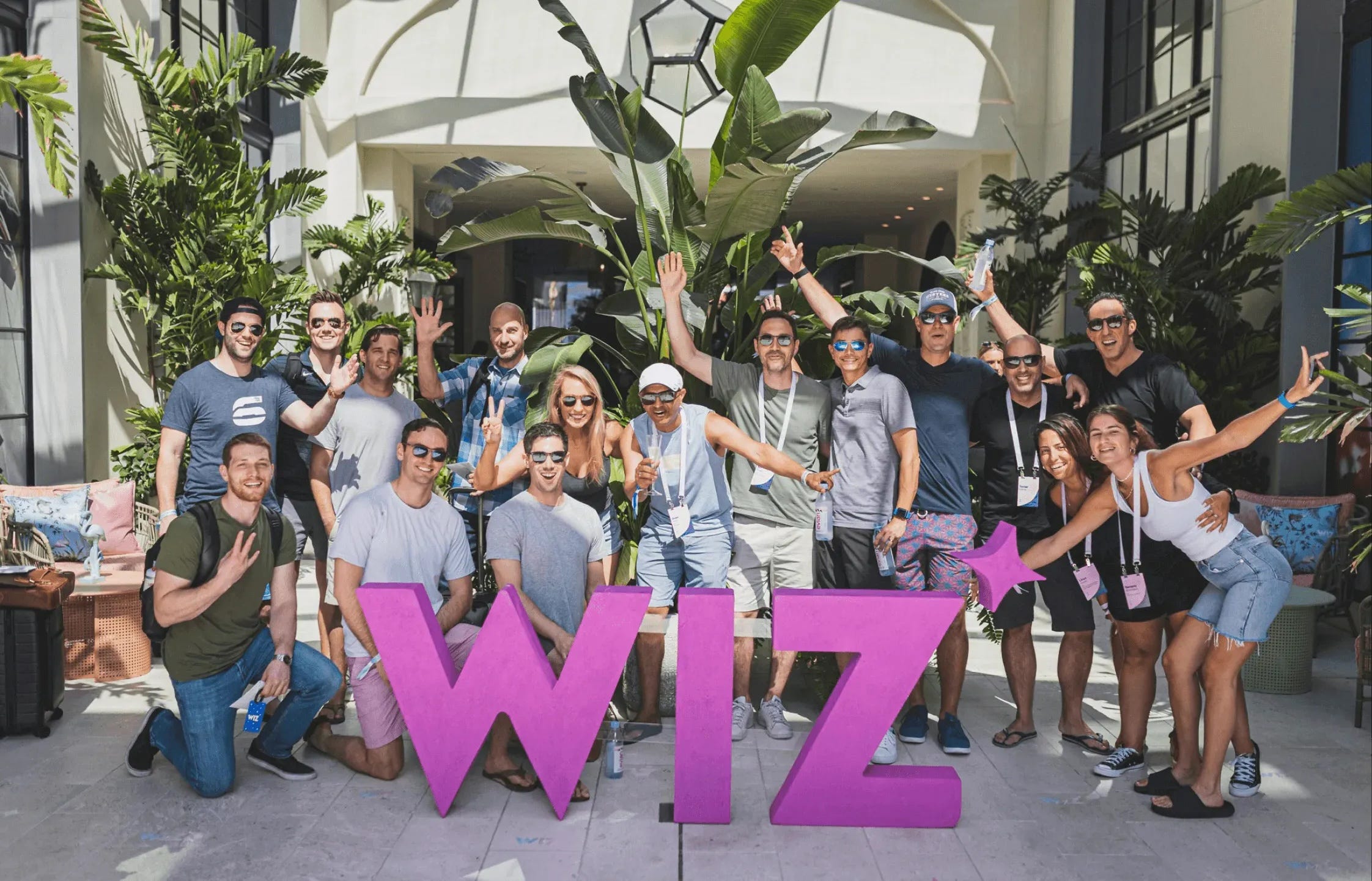
The Wiz playbook (now public):
Spoon-feed everyone. Pre-write the posts, make personalized images, and send each one via Slack 1:1 with “copy/paste/post” instructions.
Run internal contests with real money. Alex Lieberman at storyarb ran a 10-week “Own The Internet” competition with a $5,000 prize that pushed impressions up 87% and pipeline up $183K (22%).
Build a private “Wizfluencers” club. A Slack channel for the social superstars in the company, with perks, early product access, shareable certificates, and a private leaderboard.
15-min LinkedIn workshops on demand. Any team that wants help books me, I show up to their weekly sync, walk through the playbook, then take posts for 1:1 feedback after.
The pattern repeats outside of Wiz. My favorite example is Cluely’s Roy Lee - he built the entire company through his own personal posting. Roy *is* the marketing channel.
And if your founder won’t write, hire a ghostwriter. A part-time ghostwriter costs wayyyyy less than a single month of paid ads, and the output compounds for years.
How to do it: start with the founder. Book a recurring 30-minute slot where a marketer or ghostwriter pulls 3 insights out of them, then publish 3 posts a week from the founder’s personal account.
Read more: Employee-led marketing playbook
6. Your design → “Word of Sight” 🖼️
Design your product so the act of using it spreads the brand. Either by making the logo extremely big in the UI, or by baking a public-by-default action into the core workflow.
I call it “Word of Sight” - an upgrade to word-of-mouth.
Examples:
Apple is the best example. Every logo on every MacBook in every coffee shop is a $0 ad. Steve Jobs flipped the logo to face the audience (instead of the user) in 1999 for exactly this reason. Before 1999, it looked like this:
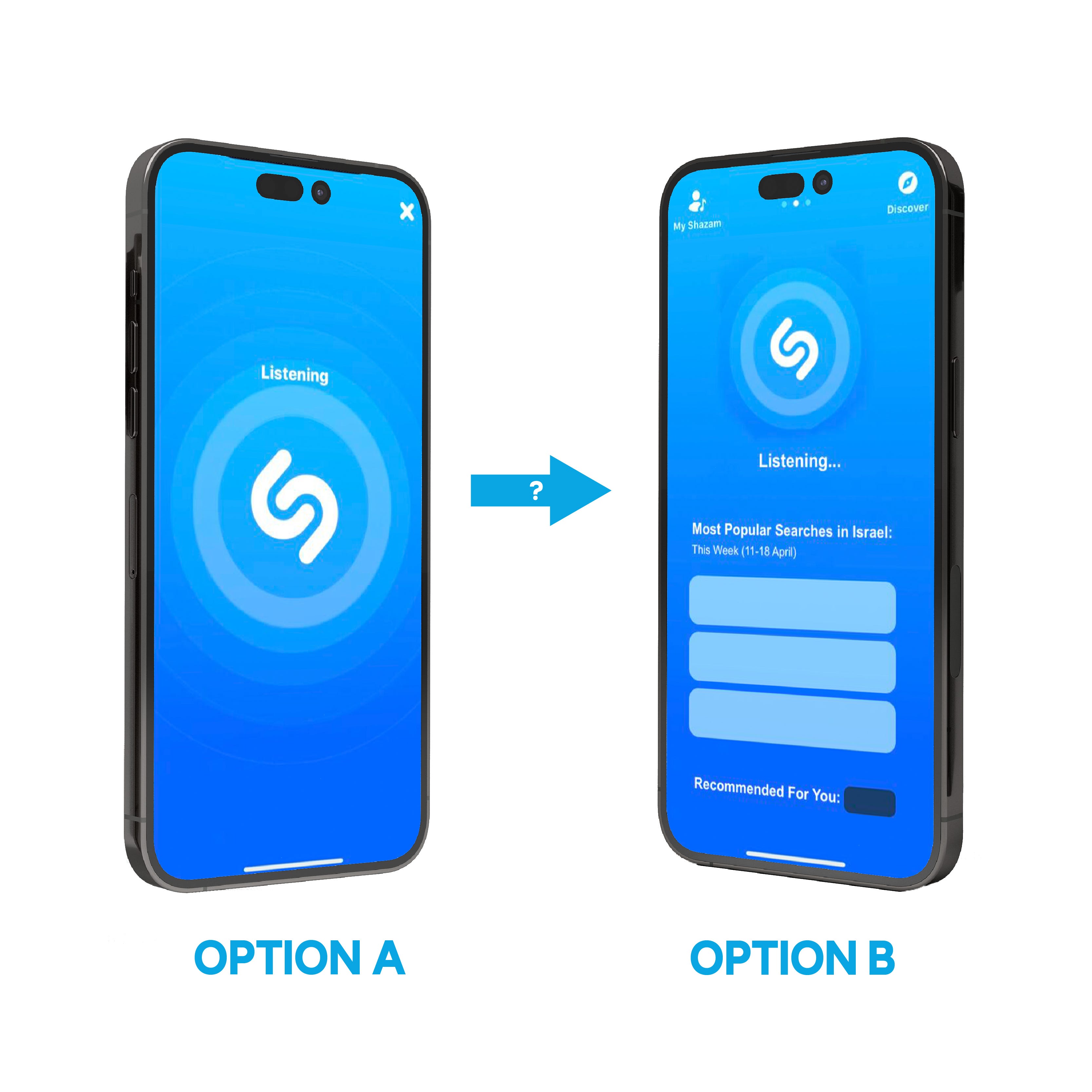
Shazam puts a giant logo on the recording screen. People hold their phones up at concerts, and everyone around them sees Shazam.

Slack’s interface (the sidebar, the super ugly purple, the channel list) shows up in every Zoom screenshare on earth and every viral screenshot of a team chat gone wrong. Super easy to recognize.
Loom keeps videos on
loom.cominstead of letting people export an MP4 (on the free plan) → every shared link is brand exposure.Otter.ai auto-joins meetings as a participant. Everyone on the call sees “Otter.ai” in the participant list.
Readwise makes users publicly tag
@readwisein the comments to save a tweet. Every save becomes a public ad.

This one’s brilliant because it compounds. Every screenshot a user takes of your product is free marketing forever.
How to do it: find where your product gets seen by people who don’t use it (app icon, loading screen, email signature, exported file, public share link). Make the brand large and unmissable in that exact moment. Then find one private action you can make public-by-default (a save → tag, a share → branded URL, an export → watermarked logo, etc).
Read more: 5 design rules for “Word of Sight”
7. Your name → praise others 🏆
My favorite play in the entire $0 playbook.
Even if you don’t have an audience, your personal name and your brand name are still valuable resources (as long as they look “real”). Use them to celebrate the best people in your space. They’ll repay you in shares, intros, and reciprocal praise.
Remember: Your greatest existing resource is your ability to make other people feel good about themselves. And you can do it by leveraging your name.
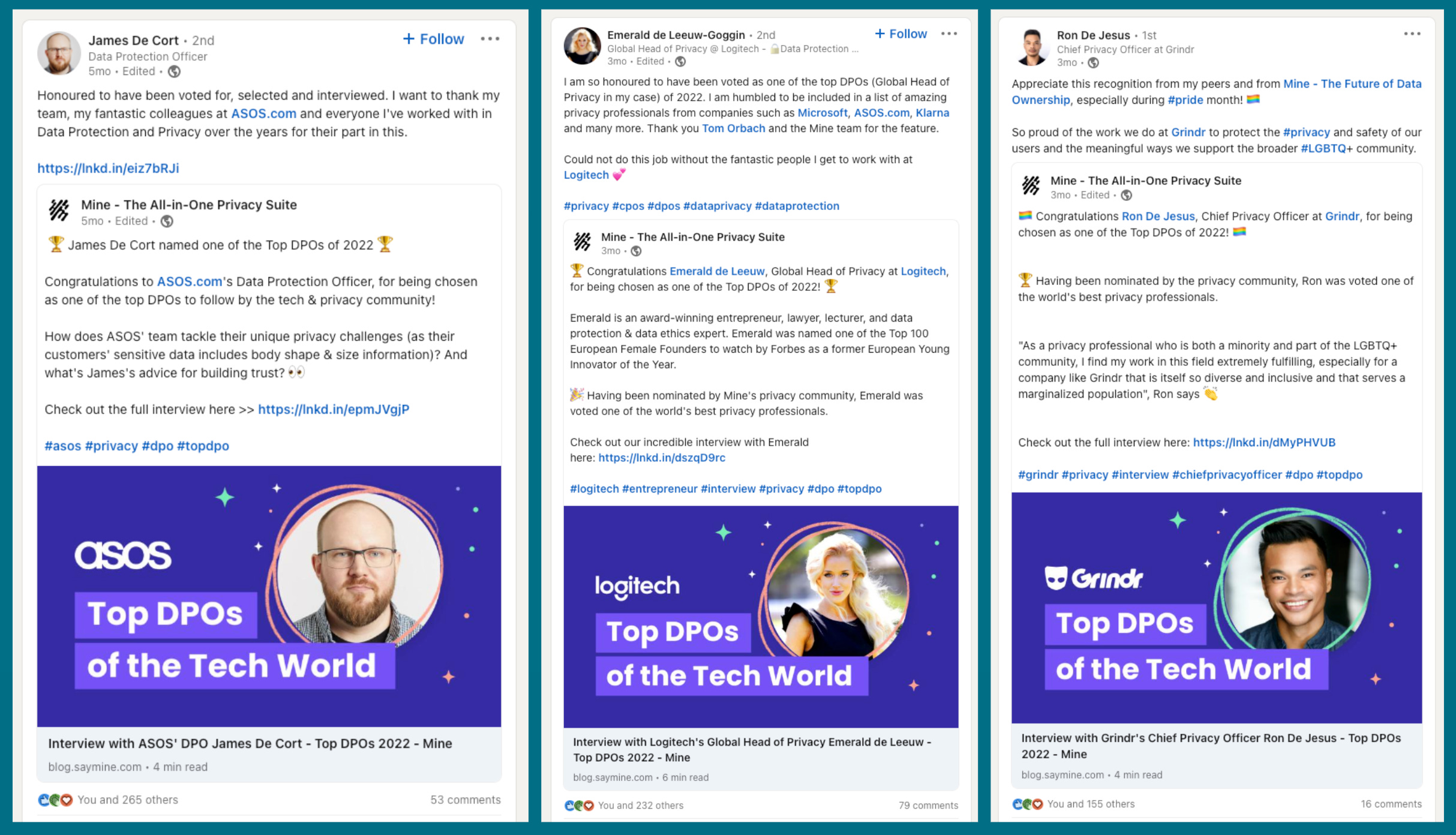
At Mine, I built a “Top 10 DPOs to Follow” page → emailed all 10 → all 10 said yes to interviews → all 10 shared it on their LinkedIn. Site traffic up 4,000% that month. $0 spent.
Forbes 30 Under 30 is the most successful praise-led marketing engine in media.
Ahrefs publishes “best SEO blogs to follow” and “top SEO experts” lists. Every person on those lists reposts them.
Zapier celebrates top AI builders in a special ceremony.
Glassdoor’s “Best Places to Work” is the same play at enterprise scale. Every CEO on the list brags about it from what I’ve seen.
The exact DM that worked for me at Mine:
“Hi [Name], we’re recognizing the top [role] in [industry] and you made the list. We’ll be writing an article about you and your role in [specific achievement]. Would you be open to a quick 15-min interview to make sure we get it right? Here’s the project: [link]”
The real hack is the phrase “we will be writing”. The decisive verb makes the recipient slightly nervous about how they’ll be portrayed, so they say yes immediately (to control the narrative).
If I had $0 and one week, I’d run this on day one.
How to do it: pick a tight, specific role inside your ICP. The narrower the better (”B2B SaaS marketers at Series B startups” is great; “marketers” alone is too broad). List the 10 best people in it. Build a tiny site with their photos and one quote each. Email them with the DM above. Wait.
Read more: Praise-led marketing playbook
Bonus: 7 more $0 plays I couldn’t fit above ↓
1. Optimize for “+ reddit” SEO 🟧
People add “reddit” to Google searches to skip marketing fluff. Reddit is now the #3 most visible domain on Google. Build a presence on relevant subreddits, answer real questions, build karma, and mention your product only when it’s actually the right answer. Full playbook here.
2. Get recommended by AI chatbots 💻
ChatGPT, Claude, and Perplexity recommend brands by name. If yours isn’t in their training data, you don’t exist. SEO lead at HiBob took their AI mention rate from 17% to 51% with one specific playbook. I broke the whole thing down here.
3. The “inspired by” trick 🪞
Build a project, tag the influencer who inspired it, credit them publicly. Strokes their ego → triggers reciprocity → gives them social proof to share. Dan Ariely shared my Viral Post Generator after one “inspired by you” email. Full story.
4. Launch on Product Hunt 🏆
A successful Product Hunt launch can drive thousands of visitors and years of passive traffic. I launched Marketing Ideas in Feb 2024 and still get dozens of subscribers every month from it 15+ months later. My #1-of-the-month playbook here.
5. Career page stunts 💼
Your careers page gets high-intent traffic with zero marketing leverage, unless you make the job posts shareable. Beehiiv’s “Remote Office Manager” went viral on LinkedIn. Fiverr created a job for a “GIF Picker” and traffic went up 91%. Templates and full breakdown.
6. Collect “love stories” instead of testimonials 💌
Generic “Best [industry] product!” reviews are useless. They sound fake and anyone can get those. The reviews that actually convert are what I call love letters: emotional, metaphor-heavy stories about your product. Full guide here.
7. Ambush “[competitor] discount” searches 😈
Build pages that rank for “[competitor] coupon” and “[competitor] discount.” Those searchers have credit cards in hand. This is the “evil genius” way to steal customers from competitors.
See you next week ✌️
Tom
Want to sponsor the Marketing Ideas newsletter? ♥️ Apply here